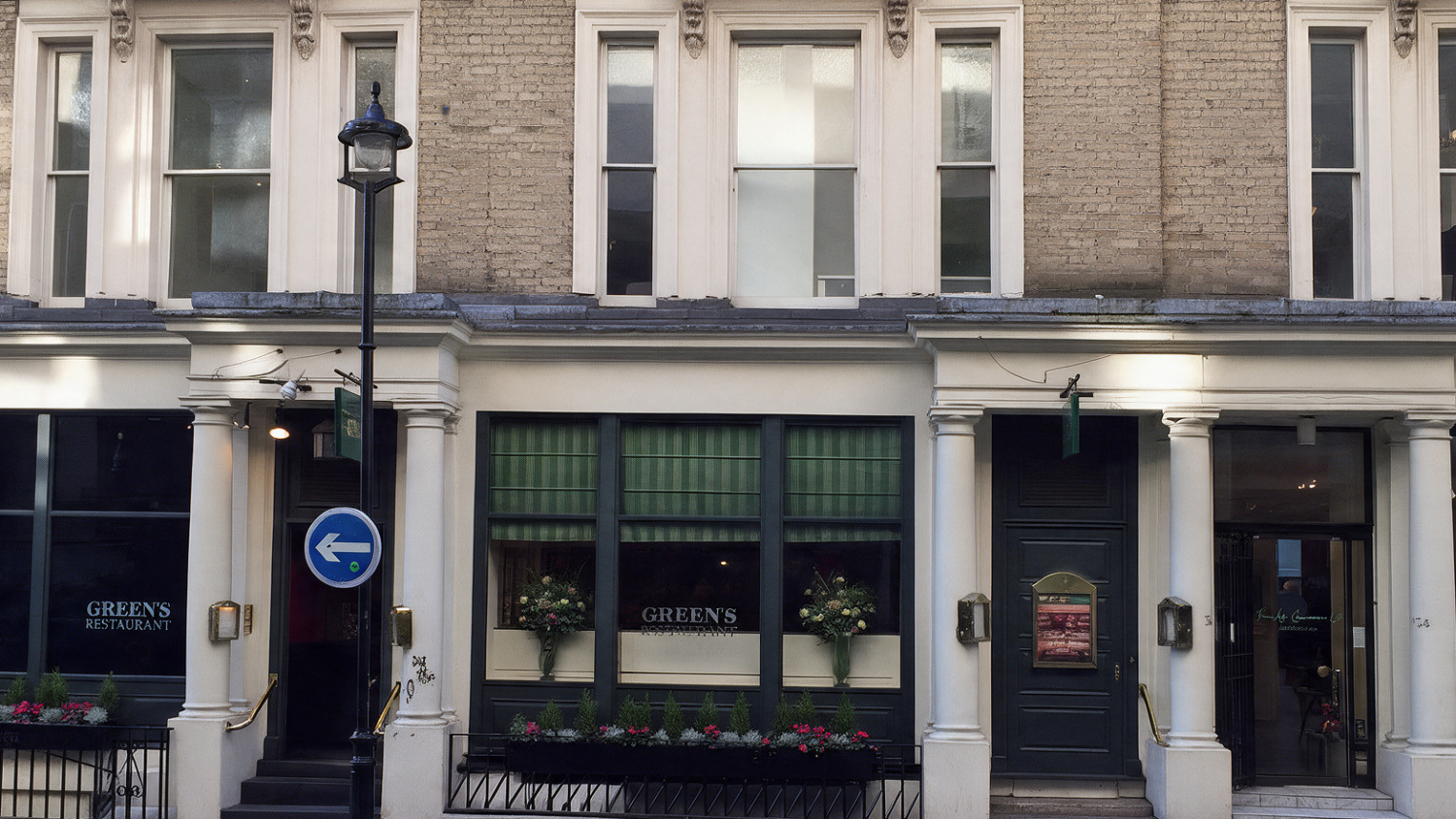
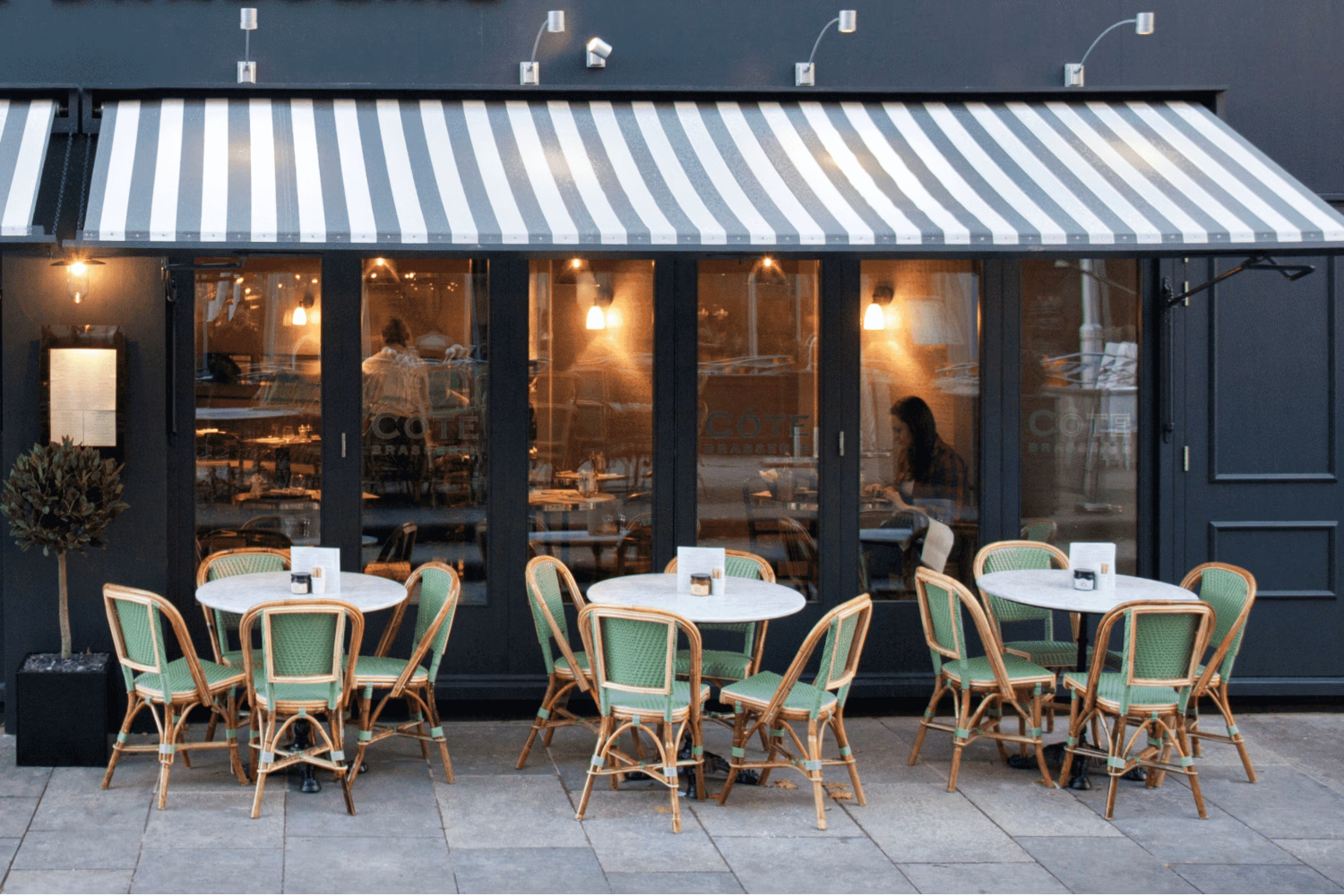
You have eaten at Côte, or you have walked past it deciding not to, and either way you know precisely what is inside. The dark green frontage, the marble-topped tables and cane chairs doing their best impression of a boulevard, the menu that offers steak frites, moules, a croque, a tarte and a prix fixe priced to make the decision easy. There will be one in the smart part of whichever town you find yourself in — beside the good bookshop, across from the department store that used to be a department store. It is the restaurant equivalent of a dependable saloon car: nobody's dream, everybody's sensible choice.
Côte opened in Wimbledon in 2007, the creation of the restaurateur Richard Caring and his partners, and it grew with the confidence of a format that had solved its own puzzle. The trick was to take the codes of the Parisian brasserie — the zinc, the long menu, the all-day service, the set-price ceremony — and render them repeatable, so that the experience could be installed in a market town the way a bank branch is installed, and behave the same way each time. By the eve of the pandemic there were getting on for a hundred of them.
The snob's position writes itself, and I decline to write it. Yes, this is templated Frenchness assembled from a manual rather than inherited from a grandmother. Yes, the steak frites has been value-engineered to survive a wet Tuesday in February across forty kitchens at once. But there is an honest thing here that the food snob, in his hunt for the undiscovered and the authentic, keeps missing: reliability is a service, and a scarce one. The traveller, the parent with restless children, the couple who want dinner rather than an adventure — these people are not being fobbed off. They are being spared. To know before you sit down that the meal will be decent, the room warm and the bill legible is worth more than most tasting menus, and Côte has provided it, town after town, for the better part of two decades.
So how is the conjuring done? For the diner, the offers are real and, now and then, startling. The standing Prix Fixe runs from a little over £20; app-only set menus have dropped as low as £15 for two courses and £19 for three; students take twenty per cent off every day of the week, NHS and key workers much the same from Sunday to Thursday, and a constant drip of newsletter codes and seasonal sweeteners tops it up. Read the best of these at face value and a three-course French dinner arrives for less than two cocktails cost in the same postcode. It looks, on the page, like something for nothing.
It is not magic; it is method. The prix fixe is the oldest device in the brasserie repertoire — a short, fixed list of dishes the kitchen can buy, prepare and plate with near-mechanical predictability, which throttles waste and quickens the covers. Scale supplies the rest: seventy-odd kitchens ordering the same steak, frites and wine command terms no lone bistro can touch, and the group runs its own supply arm, Greenfield Food Supply, to hold cost and consistency in check from the loading bay onwards. The headline price is bait; the margin is made back on the wine, the extra side, the supplement for the better cut, the dessert nobody refuses. And the discounts are not scattered but aimed — routed through the app, pointed at the dead Tuesday lunch rather than the heaving Saturday night, dangled before the student and the nurse who fill tables that would otherwise sit empty. This is not generosity. It is yield management in a Breton top.
The irony is that such steadiness on the plate has been paired with anything but, in the accounts. Côte fell into administration at the depth of the pandemic in 2020, close to a hundred sites and unable to keep them lit; the Swiss firm Partners Group bought it out of the wreckage for £55m and set about repositioning it as something more accessible, pushing delivery through a Côte at Home line. The rescue did not settle matters...
Restaurants have been shed; the estate is now nearer seventy than a hundred.
In October 2025 the business changed hands yet again, to the Karali Group, the latest buyer to believe it can succeed. In 2026 came the largest menu overhaul in the chain's history, handed to Steve Allen, once Gordon Ramsay's executive chef — breakfasts from £3.95, all-day opening, a Steak Haché Burger and, in a distinctly un-Gallic act of surrender, a plate of fish and chips. We can but wait and see if this will save the familiar and still much-loved high-street brand.
Because, what Côte sells, in the end, is permanence — the assurance that the green awning will be there next year, serving the same steady dinner, on the evening you next need it to be. It is an assurance the boardroom has spent fifteen years unable to keep to itself, passing the brand from hand to hand while the diners, blessedly innocent of the whole saga, went on ordering the steak. Perhaps that is the real French lesson in it: that the thing itself is not the company that owns the name, nor the fortune draining steadily out of it, but the ordinary, repeatable dinner that carries on regardless. The accountants come and go. The frites remain.