
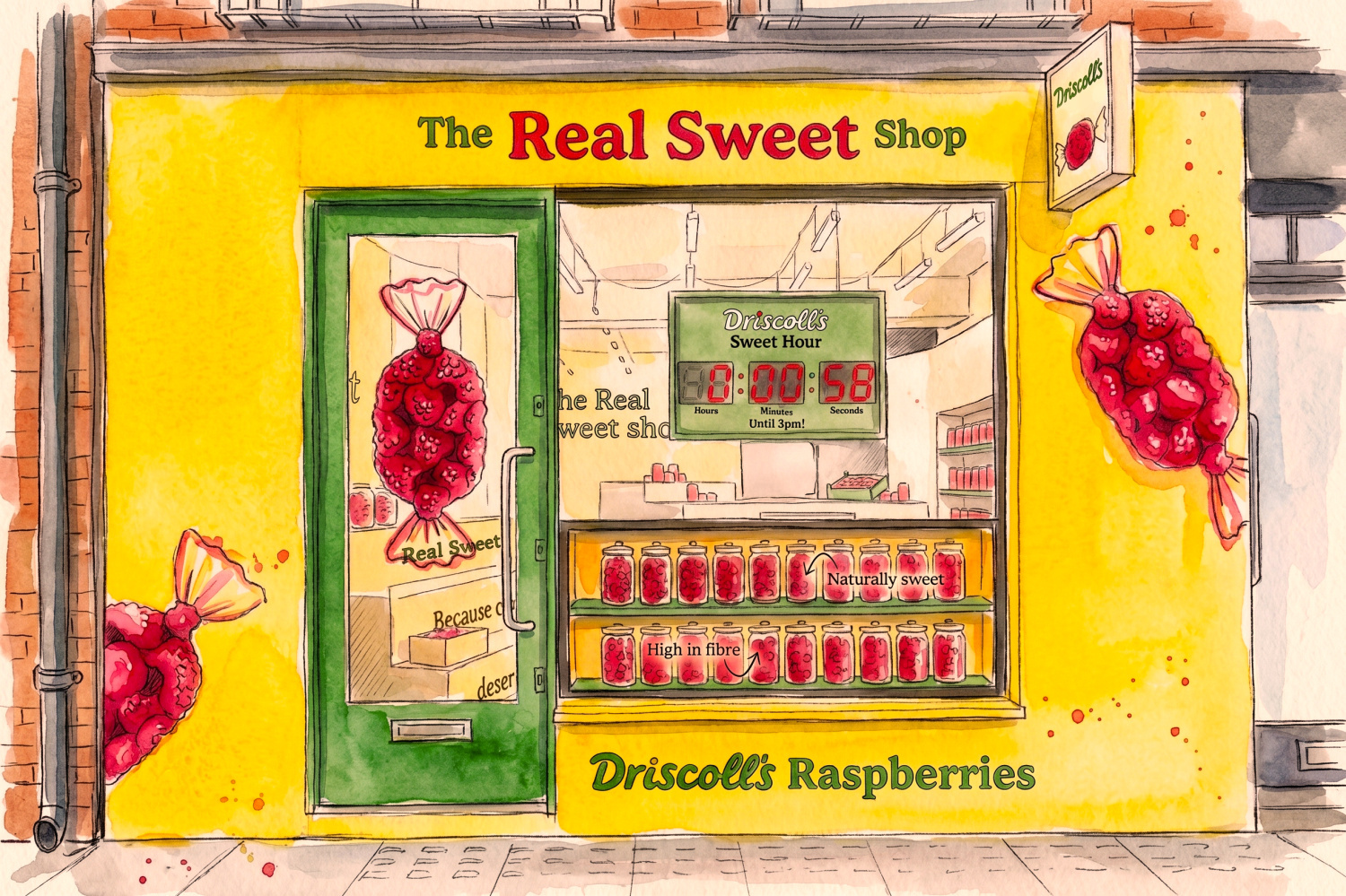
Fresh produce does not usually behave like this. For three days from 22 September, Driscoll's — the UK's biggest berry supplier — takes over the Chin Chin ice-cream site at 54 Greek Street and runs it as 'The Real Sweet Shop': a pop-up giving away punnets of raspberries between 3pm and 6pm, built around a daily countdown to 'Sweet Hour,' a frozen-yoghurt bar of raspberries over honey-sweetened Greek yoghurt and kefir, and a Raspberry Roulette prize wheel. It is precisely the sort of experiential activation a spirits, snack or confectionery brand would run — deployed, unusually, by a category that normally lives or dies on the supermarket shelf, competing on price and punnet size rather than personality.
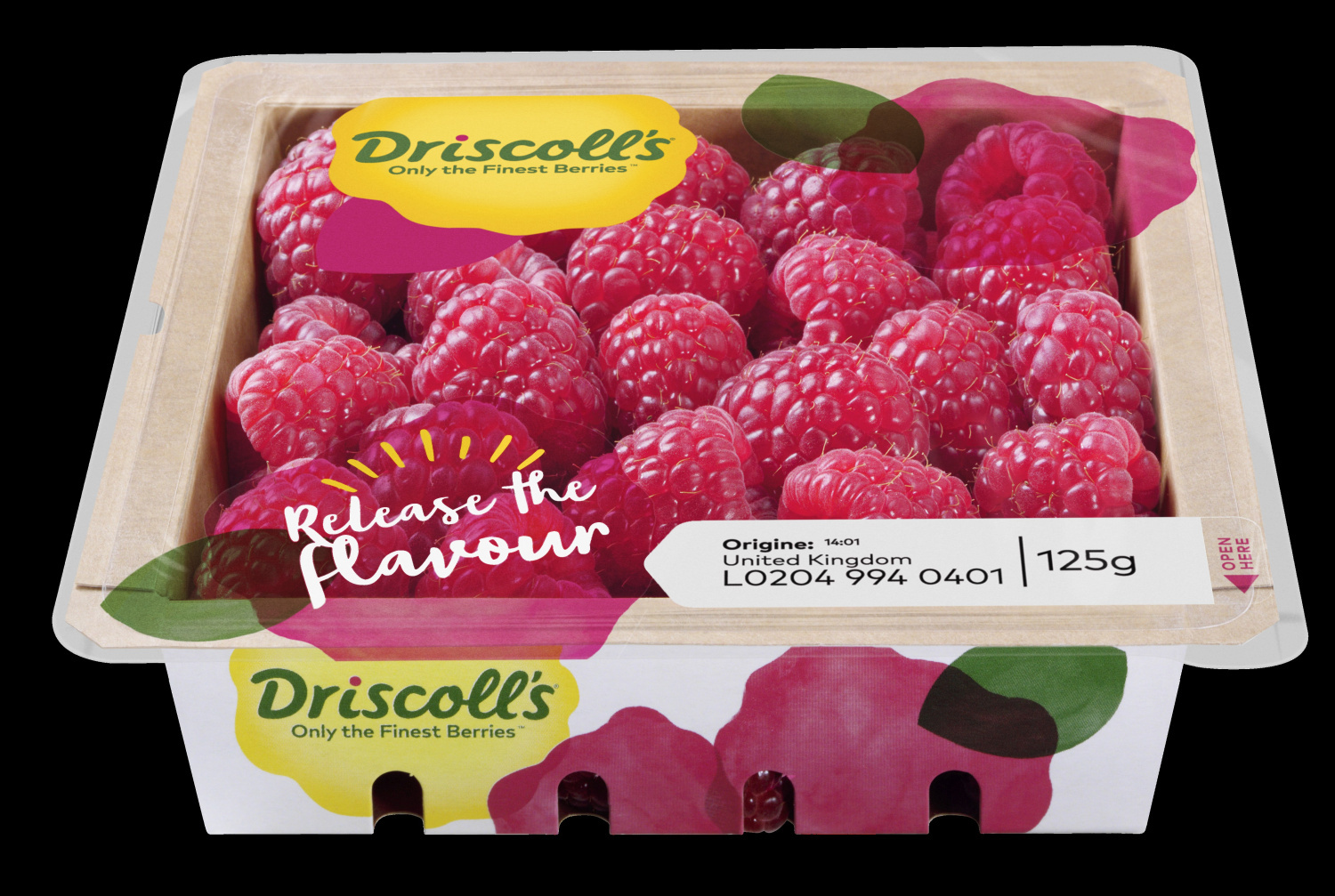
That is the first thing worth noting: a fresh-produce giant has decided its raspberries are a brand, not a commodity. Driscoll's leans on more than a century of proprietary breeding and its "Only the Finest Berries" line, and it has timed the stunt to the peak of the September harvest, when the fruit is genuinely at its best — a neat piece of seasonal marketing that lets the product carry the promise. Give away a few hundred £3 punnets at their ripest and you have cheap, high-quality sampling; wrap it in a themed pop-up, complete with a ritual and a countdown clock, and you have dwell time and earned media on top.
The engine of that earned media, as ever, is commissioned research. Driscoll's OnePoll survey of 2,000 adults finds that a quarter of Britons hit their energy low between three and four o'clock, and that half then reach for biscuits, cake or packaged confectionery. The poll also probed awareness of ultra-processed food — and that is the real target. The number does two jobs at once: it buys coverage, and it frames raspberries as the better-for-you swap in an afternoon-snacking market growing visibly nervous about ultra-processed foods. A consultant dietitian is on hand to lend the health claim its third-party credibility, positioning fruit not as the worthy option but as the indulgence itself.
For the hospitality trade, the interesting part is the target rather than the tactic. The 3-to-4pm dip is one of the softest dayparts on any operator's clock — too late for lunch, too early for after-work drinks — and Driscoll's has reframed it as a branded occasion with its own name, ritual and reason to show up. The prize wheel's Morrisons vouchers give away the ultimate destination, which is the grocery aisle rather than the café table; this is, at heart, an FMCG play designed to drive retail purchase off the back of a Soho halo. But the reframing travels. Anyone selling the afternoon — coffee shop, hotel lounge, food-to-go counter — is watching the same consumer shift: guests who want a treat without the processed-sugar guilt, and who increasingly read "fresh" and "natural" as premium rather than penitential.
The lesson, then, is less about berries than about positioning. Produce is premiumising, the ultra-processed foods backlash is real and monetisable, and the afternoon is up for grabs to whoever can make the healthy choice feel like the treat rather than the sacrifice. That is a menu opportunity as much as a marketing one — a reason to give the mid-afternoon list the attention usually reserved for brunch or the evening. Whether a habit as entrenched as the 3pm biscuit can actually be shifted by a long weekend in Soho is another question entirely; a three-day pop-up buys a brand halo far more reliably than it changes behaviour. But as a reading of where afternoon spend is heading, Driscoll's has the direction about right.
Comments (0)
No comments yet.
Commenting is for subscribers. Sign in or subscribe to join the conversation.